
Tūrangi's rescue helicopter base
The airfield is now the base for rescue helicopter operations in and out of Tūrangi, for both training and live missions, since the old helicopter pad was closed.
Tūrangi Aerodrome · NZTN
Sixty years of flying on Grace Road: the people, the aircraft, and an airfield that has become an essential part of the Tūrangi community.
For more than sixty years this grass strip on Grace Road has served the whole community, not just the people who fly from it. Today it is more important than ever.
The airfield is now the base for rescue helicopter operations in and out of Tūrangi, for both training and live missions, since the old helicopter pad was closed.
Since the 1960s patients have been flown from Tūrangi to hospital: 17 ambulance flights in six months of 1971 alone. During Cyclone Gabrielle in 2023 the airfield was a backup landing site and staging point for flights to Hawke's Bay. And in the 1970s, TV reporters flew the day's film out from here to make the evening news.
The airfield was an integral part of the recent firefighting effort in Tongariro National Park, continuing a long history: aircraft from Tūrangi were flying forest fire patrols back in the 1980s.
Fly-ins have brought dozens of aircraft and their crews to Tūrangi: around 54 in 2014, and about 40 for the AOPA fly-in in November 2024, with pilots coming from Auckland to Blenheim. Fly-in visitors spend money at local restaurants, lodges and rafting operators.
From the lolly drop at the 1967 field day to today's fly-ins, the airfield has given local families and young people a close-up look at aviation.
When Taupō Airport is busy with skydiving, flight training moves to Tūrangi. The quiet grass strip is an ideal place for student pilots to practise circuits and landings.
Please respect the land, the neighbours and the people who make flying here possible.
Flying at Tūrangi goes back to the mid-1960s, when the town was growing fast with the Tongariro power scheme. Instructors came down from Rotorua, an airstrip was set up on Grace Road, and locals took to the air. Here's how it unfolded, as reported in the newspapers of the day.
Aircraft are already using Tūrangi before any formal airfield exists. The earliest record found so far is a sad one: Auster J/5B Autocar ZK-AYQ is destroyed by fire at Tūrangi in September 1963.
A Rotorua Aero Club instructor, Ian Butchart, begins visiting Tūrangi on Wednesday afternoons and Sunday mornings with a Morane-Saulnier trainer, and several locals start learning to fly.
The Rotorua Aero Club arranges a lease of land near the town for an airstrip: Crown land along Grace Road, beyond Fletcher's sawmill, let through Turangi Farms Ltd. The Turangi Liaison Committee debates whether it should be a public or private field, and Civil Aviation agrees it could be licensed as a public aerodrome.
In May 1965 a Rotorua Aero Club Cessna 172, ZK-BSU, due to land at Tūrangi just before dark, goes missing on a flight from Nelson, and an air search is planned for first light. Caught out by darkness and bad weather, the pilot has made a forced landing south of Rangipo Prison, and all on board are unhurt.
Twelve residents are learning to fly with instructor Peter Matich, who teaches at Tūrangi on Fridays and Sundays. About 30 people in the district can now handle an aircraft.
Tūrangi's first field day brings seven aircraft from Rotorua, Whakatāne and Taupō for scenic flights, bombing and landing competitions, a hāngī and a lolly drop for the children, flown by local instructor Russell Pearce. A DH89 Dominie biplane lands on the strip, the biggest aircraft yet. Later that year members host visitors from the Middle Districts Aero Club and fly to Rotorua for the area competitions.
Tūrangi is added to the Rotorua Aero Club's air charter licence. A Cessna 172 is now based at the airfield, which has about 2,800 feet of formed runway. Russell Pearce, a local schoolteacher, is the resident pilot and instructor.
The airstrip supports pilot training for around 25 locals, tourist and business flights, and emergency hospital flights with St John. By the end of the year the Tūrangi club has 30 members, a large number for a branch club, and members have built their own clubrooms.
In 1970 the local members become a club in their own right: The Turangi Aero Club Inc. is registered as an incorporated society. Locals keep going solo, and mercy flights carry patients from Tūrangi to hospital. By 1971 the Turangi Aero Club meets on Monday evenings at the aero club building at Tūrangi Airport, where pilot night classes are held. Lakeland Aviation takes over the region's charter licences from the Rotorua Aero Club, and in its first six months flies 17 ambulance flights from Tūrangi.
A Waikato Aero Club Piper PA-28-180 Cherokee, ZK-DGO, has an accident at the Tūrangi airfield in April 1974. The pilot, alone on board, is unhurt.
The original incorporated society is formally dissolved in July 1978, but flying at Tūrangi carries on.
In the early 1980s Taupō instructor Arthur Whitehead comes down every Sunday to teach at Tūrangi, and local pilots keep their own aircraft on the strip. From at least 1984, Cam and Kris Shepherd's local business, Tūrangi Scenic Flights, advertises the best volcanic flights in the country, over snow-capped mountains, crater lakes, steaming thermal areas, Lake Taupō and the Tongariro River, along with charter, air taxi, photography and flights into the Kaimanawa Ranges for hunters, anglers and trampers. Joy rides start from $22. In 1988 the local paper recommends the flights as one of the best ways to see Tongariro National Park, especially for photographers at sunset. Cessna 172 ZK-CXN is photographed at Tūrangi with the operation in 1989, and the business is still flying hunters in 1991, when DOC's Target Taupō magazine thanks Cam Shepherd for his reliable and skilful flying. Local company Dwang Air also registers a Cessna 150 at Tūrangi in 1986.
A Rotorua Aero Club Cessna 172, ZK-DWO, takes off from Tūrangi on a routine fire patrol of the nearby forests with two forest rangers aboard. Tricky winds force it down just south of the runway, and all four people on board walk away unhurt.
After years of working bees on the clubrooms and hangar, the club is incorporated again as The Turangi Aero Club Incorporated on 23 January 1985. A handwritten list in the club's records from that year names J. Donald, W. Wilson, J. Anderson, P. Nicholas and K. Garbutt.
The original incorporated society is dissolved in 1993, but flying carries on. Mountain Air sets up a base at Tūrangi in 1992, and from 1997 runs winter scheduled flights linking Auckland, Tūrangi and the Chateau for skiers heading to the mountain. In 1995 a local air operator still lists its registered address as care of the Tūrangi Aero Club on Graces Road.
The club is incorporated again on 22 May 2007 as Turangi Aero Club Incorporated, the society that runs the aerodrome today.
From 2010 Taupō District Council leases the airfield land, and the club occupies its clubrooms site under licence. The club opens its gates to the aviation community with open days advertised in the CAA's Vector magazine, a two-day open fly-in, and a 2012 open day with visiting aircraft, vintage cars and a barbecue. In those years it also runs monthly barbecue fly-ins on the third Sunday through spring, summer and autumn: the RV-themed end-of-season fly-in in May 2014 draws around 54 aircraft from all over the North Island.
The AOPA North Island Christmas barbecue returns to Tūrangi in November 2020, hosted by the club. Thirty-seven aircraft fly in, from light sport aircraft to a Seneca II, and compete for the Richard Primrose Memorial Cup spot-landing trophy. The AOPA fly-in is back in November 2024, with about 40 aircraft from as far as Auckland and Blenheim.
With Taupō Airport overwhelmed by relief flights, Tūrangi serves as a backup landing site and staging point for aircraft heading to Hawke's Bay.
Through the Ngāti Tūwharetoa Treaty settlement, the land the aerodrome sits on is returned to its original Ngāti Tūrangitukua owners. Thanks to the generosity of the whānau, the club continues to operate the airfield for the benefit of pilots and the wider community.
When the council's lease ends in February 2025, the aerodrome comes within days of being deactivated. Locals, pilots and the club rally behind it, and on 26 February the Civil Aviation Authority confirms the airfield will stay open, with Tūrangi Aero Club taking over as operator and club member Mike Fransham as the named operator. Club volunteers take on the mowing and maintenance, helped by a $5,000 Tūrangi/Tongariro Community Grant in April 2025 for the club's buildings and equipment.
The club now operates and maintains the aerodrome (NZTN) itself, with the support of the landowners. With a new constitution adopted in 2025, it re-registered under the Incorporated Societies Act 2022 in March 2026, and it still runs on the same mix of volunteer effort and enthusiasm that built it. The airfield is now Tūrangi's base for rescue helicopter operations and played a key part in the firefighting effort in Tongariro National Park.
A Hamilton TV reporter who flew into Tūrangi in the early 1970s remembered the strip as a grass paddock shared with cattle. Pilots often had to make a low pass to clear the stock before landing, and in deep winter the grass could be too icy to land on at all.
From Hamilton memories of Radio 1ZH, Dispatches ↗
A pilot who learned to fly at Tūrangi in the early 1980s, and kept his own Cessna 150 and later a Piper Cherokee on the strip, remembers mowing the whole runway with a hand-pushed motor mower. He kept at it until the council was convinced the airfield was a community asset and agreed to mow it once a month. His instructor, Arthur Whitehead, drove down from Taupō every Sunday with his partner Christine.
A former Tūrangi pilot, 2026
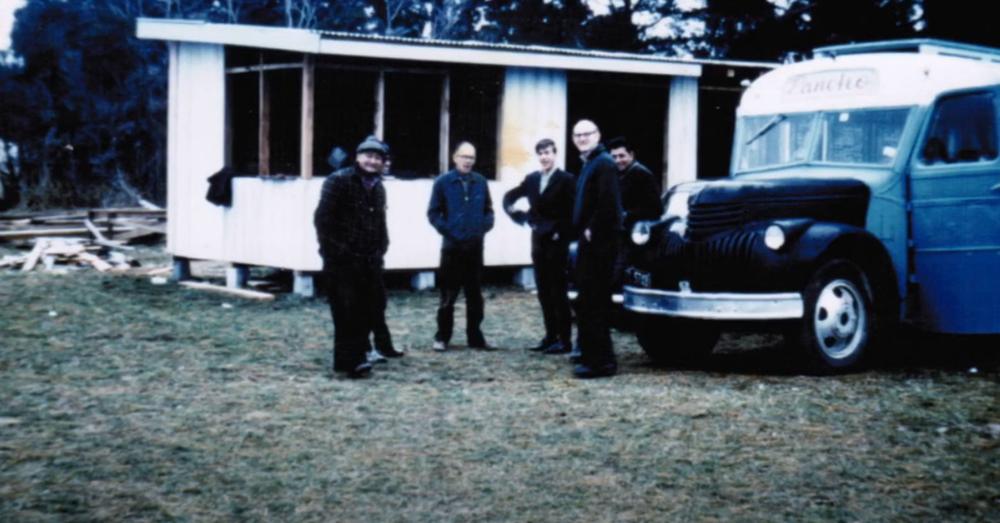
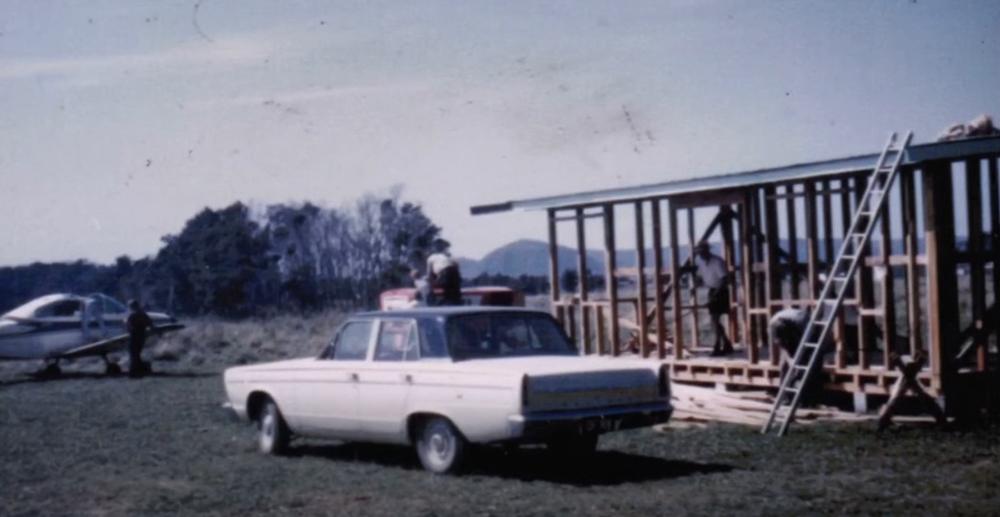
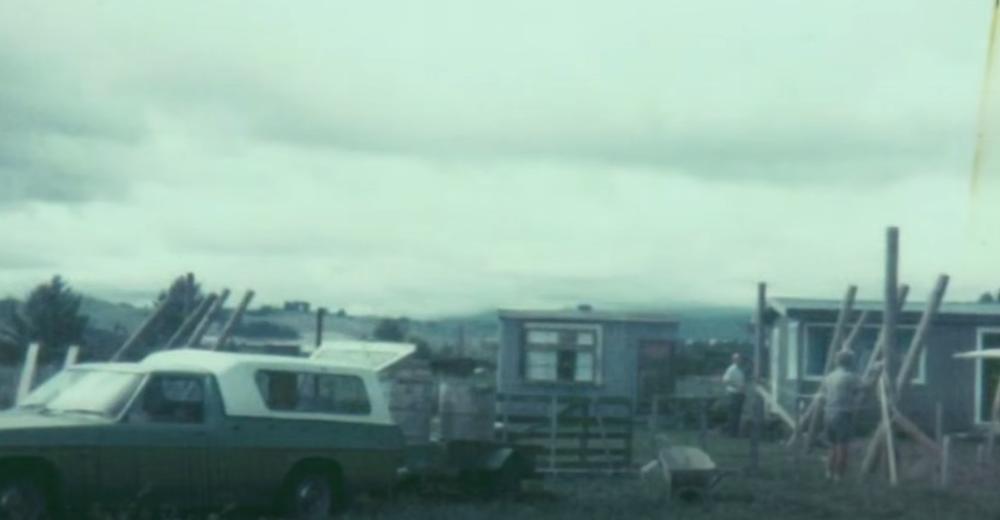
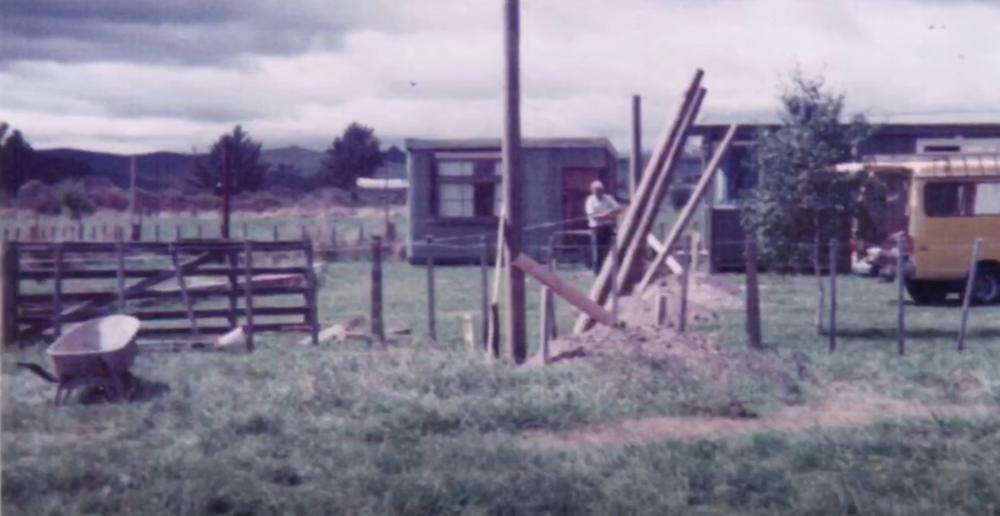
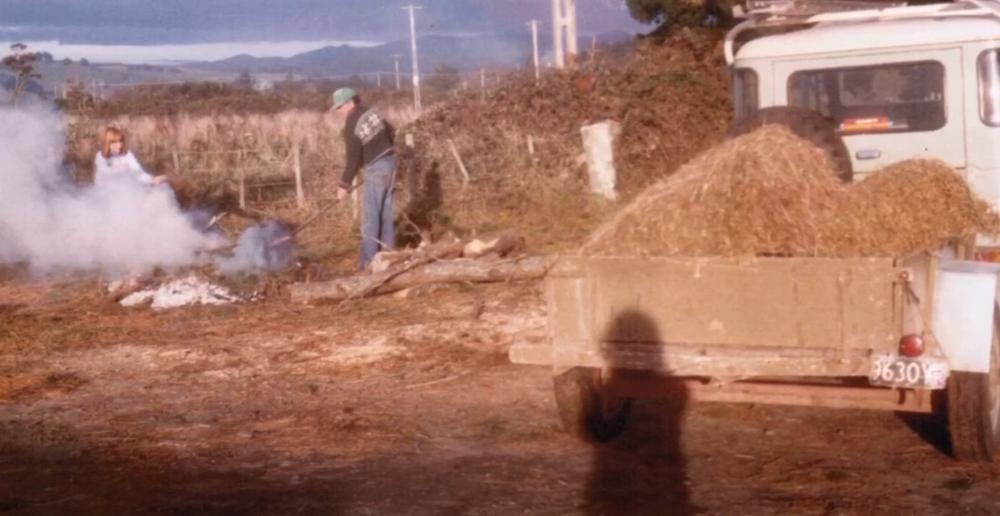
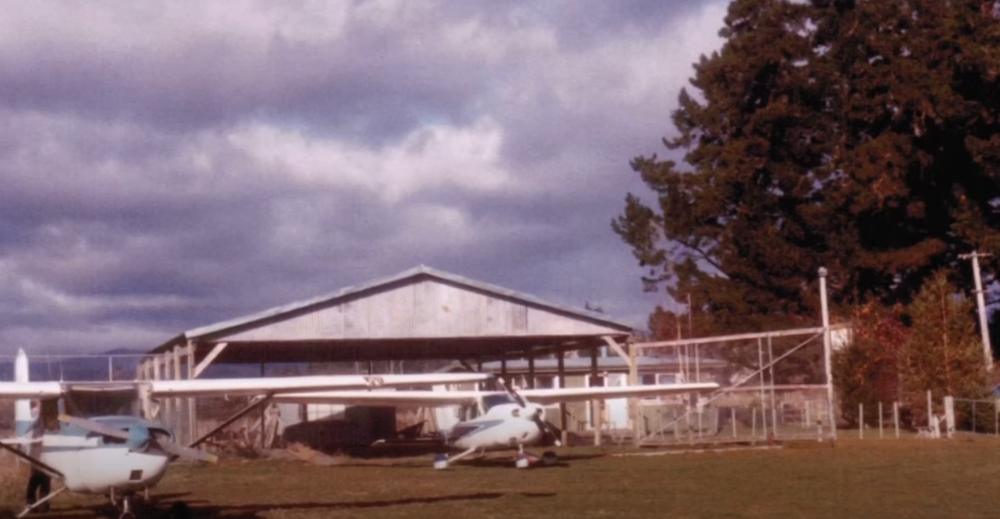
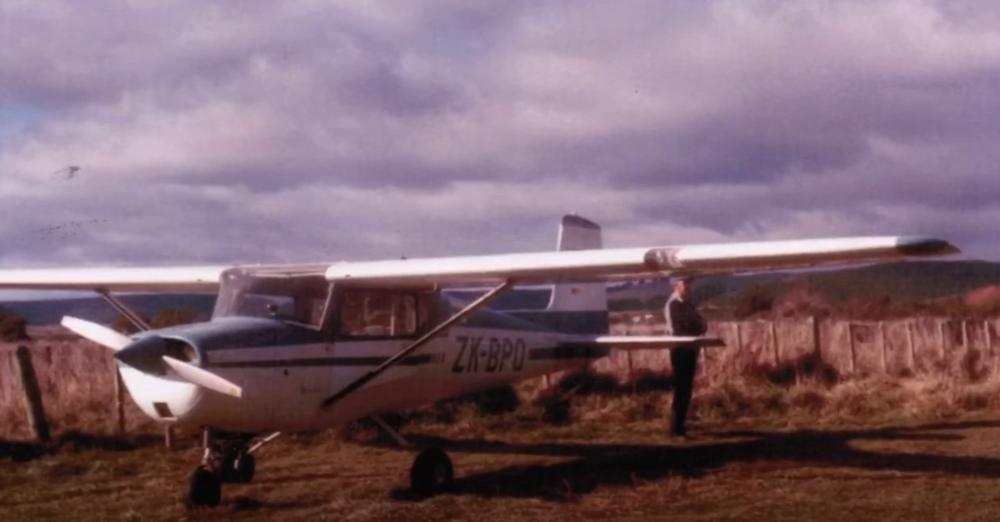
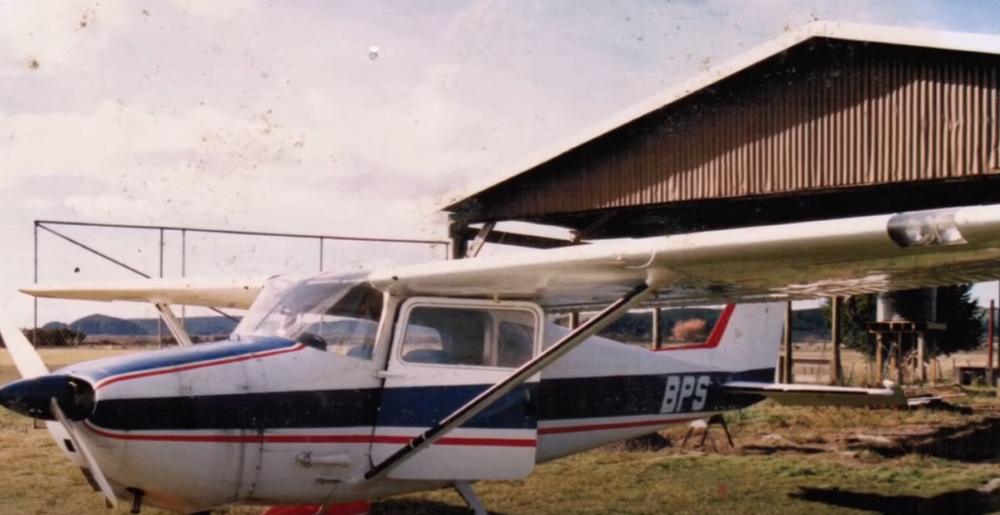
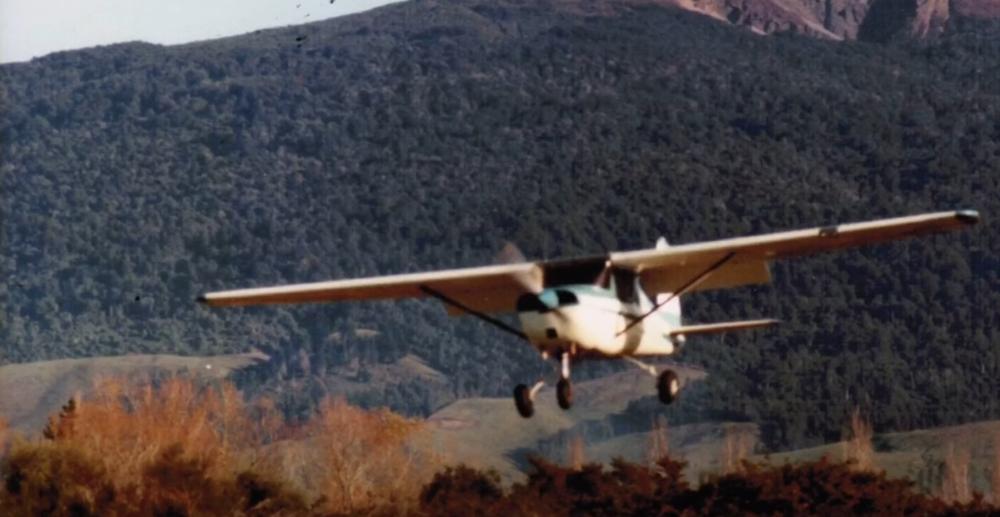
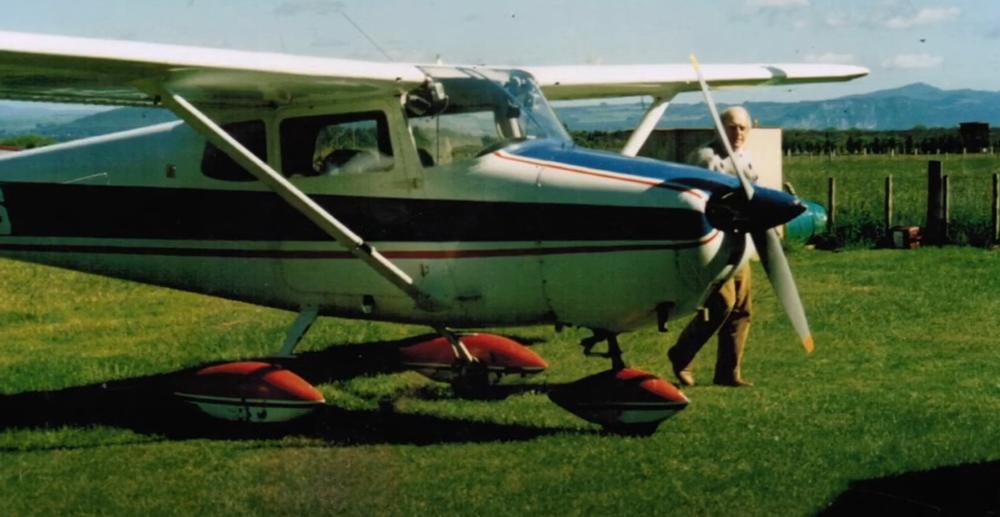
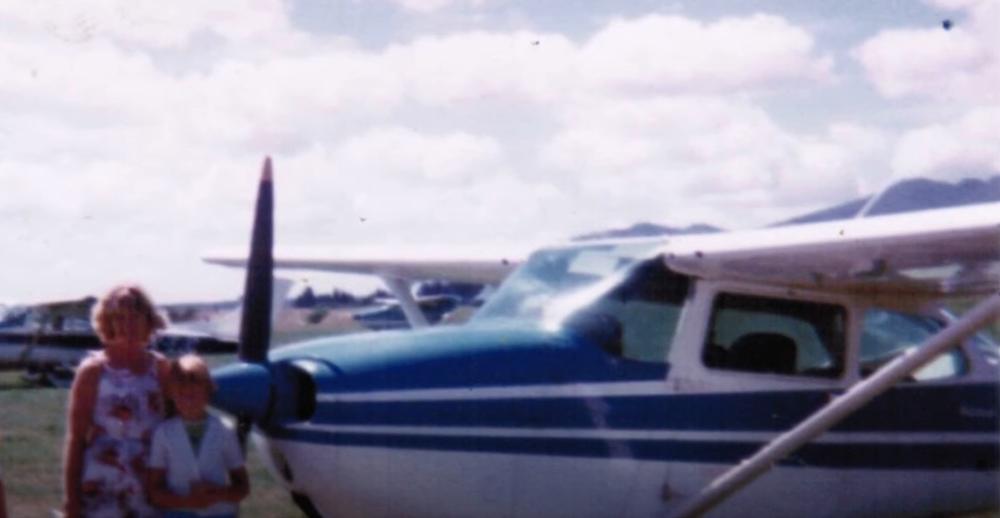
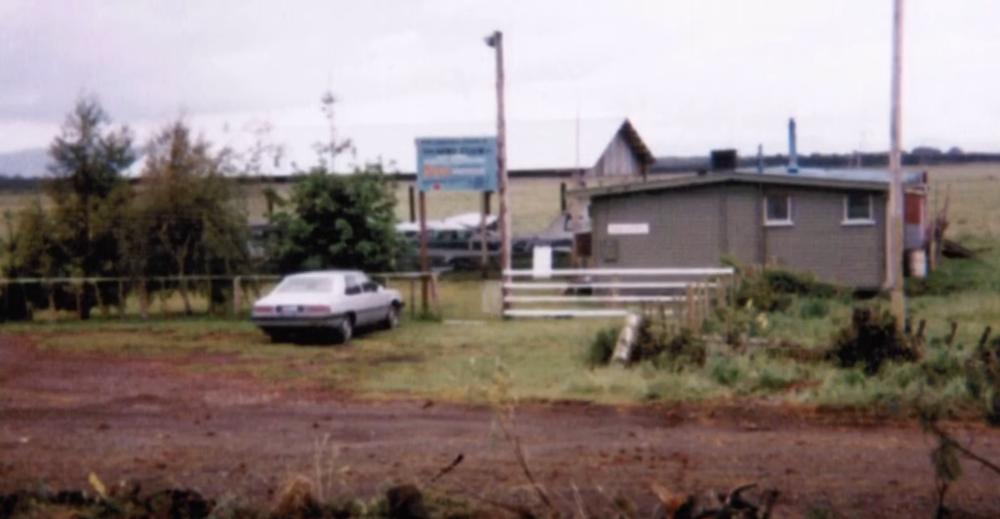
A selection of aircraft that have been based at, owned in or photographed at Tūrangi over the years. Know of others? Let us know.
| Registration | Type | Year | Tūrangi connection |
|---|---|---|---|
| ZK-BPO | Cessna | Early club era | Club photo albums |
| ZK-BPS | Cessna | Early club era | Club photo albums |
| ZK-CXF | Cessna 150H | 1980s | Based at Tūrangi, flown by a local pilot |
| ZK-CUH | Piper PA-28-140 Cherokee | 1980s | Based at Tūrangi, flown by a local pilot |
| ZK-CHI | Cessna 150D | 1986 | Dwang Air Ltd, Tūrangi |
| ZK-CXN | Cessna 172K | 1989 | Tūrangi Scenic Flights |
| ZK-BQS | Piper PA-18 Super Cub | 1998 | Owned in Tūrangi |
| ZK-HRX | Schweizer 300C helicopter | 2000–01 | Central Park Helicopters Ltd, Tūrangi |
| ZK-MAM | Zenair CH601XL Zodiac | 2009 | Mikes Aviation Management, Tūrangi |
| ZK-XRD | Vans RV-3 | 2009 | North South Outdoors Ltd, Tūrangi |
| ZK-LDL | Béarn GY-20 Minicab | 2011 | Owned in Tūrangi |
| ZK-JQT | Zenair CH601XL Zodiac | 2014 | Owned in Tūrangi |
| ZK-BZZ | Morane-Saulnier Rallye Club | 2020 | Owned in Tūrangi |
| ZK-EHL | Cessna 172N Skyhawk | 2023 | Owned in Tūrangi |
| ZK-OFB | Bowers Fly Baby 1A | 2025 | Owned in Tūrangi |
Newspaper sources courtesy of Papers Past, National Library of New Zealand. Photos are from a club slideshow of the early years. Aircraft register details from AustAirData. Have old photos or stories from the club's history? We'd love to add them. Send them through.